
Bavarian State Election — what are the parties doing well, what not?
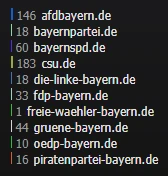
In the run-up to the 2018 state election, one thing is clear: the parties are very differently prepared for digital visibility. The analysis compares CSU, Grüne, AfD, SPD, FDP, Linke, Bayernpartei, ÖDP and Piratenpartei in search results.
Who decides the election?
The base of loyal voters is shrinking. Three groups become particularly important — they tend toward spontaneous decisions and need many positive touchpoints.
Undecided
Roughly 50% of voters. Not committed until they cast their ballot — often deciding on election day.
First-time voters
Roughly 5%. Need basic information about the election as a mechanism.
Protest voters
Roughly 10%. Strongly responsive to current political moods.
Wahlomat, Landtagswahl, Wahlprogramm.
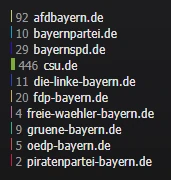
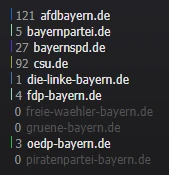
Which parties are visible for generic decision-oriented searches? The top 10 is clearly divided.
AfD
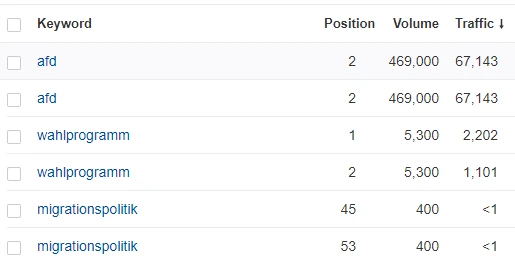
15 top-10 placements — the most of any party. Even generic search phrases such as "wahlprogramm landtagswahl" appear in position 2. From the high search volume Google infers a generic meaning.
CSU
Achieves placements only for brand-related queries. Anyone wanting to find the CSU manifesto has to search specifically for the party.
Linke, ÖDP, Piratenpartei
Not present for these queries.
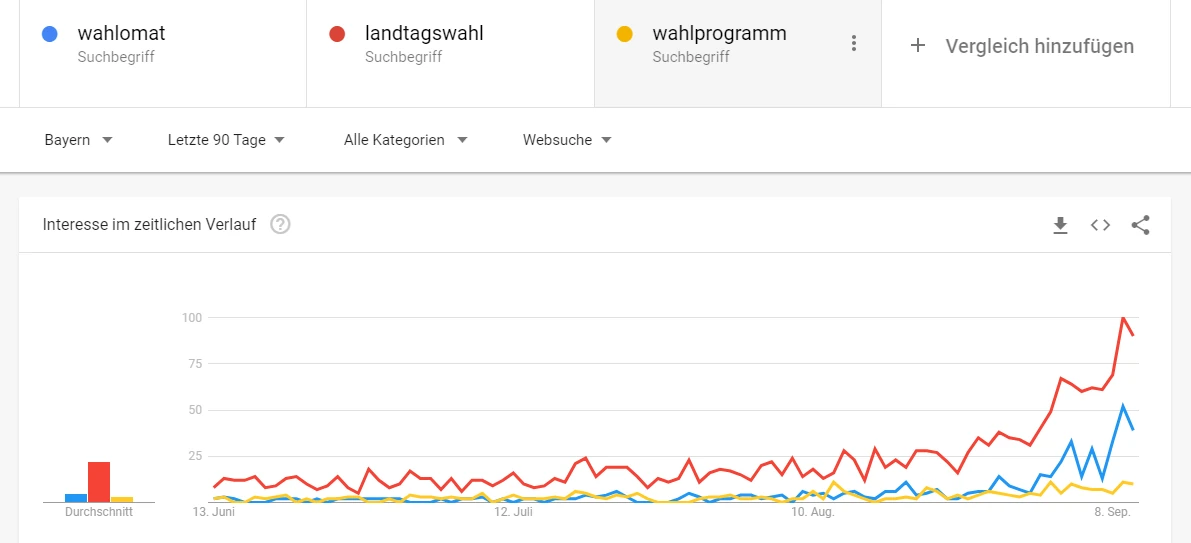
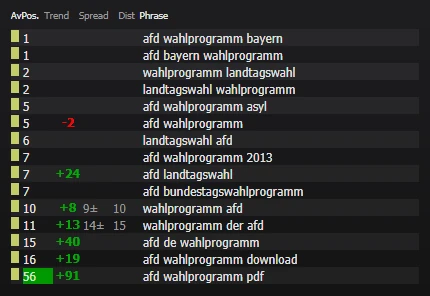
Alarming: the target audience's questions are barely being answered. Only the AfD shows up relatively strongly here — for the sake of democratic diversity, the other parties need to catch up.
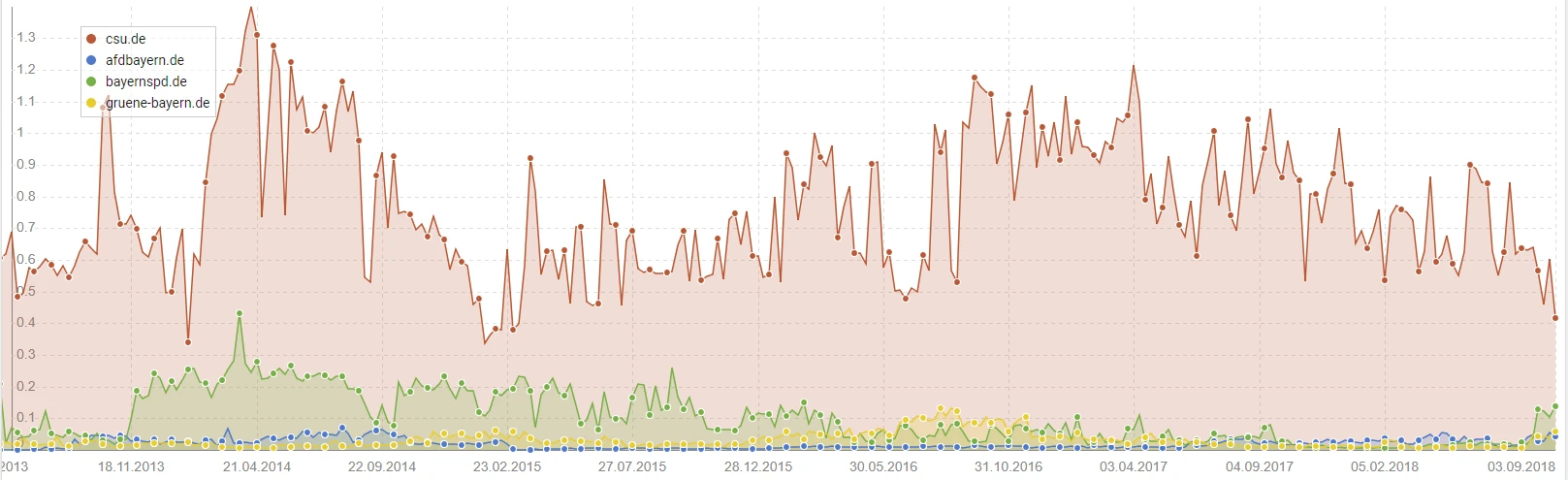
Quantitative ranking.
The CSU outclasses all other parties by a wide margin — even compared to the federal-level AfD domain during the Glaser controversy of 2017.
CSU
Clearly dominates visibility — also thanks to its federal-level relevance. Appears for the largest number of W-questions.
AfD Bayern
Strong start, followed by continuous presence. Also answers basic questions such as "wahlschein", "wahlzettel" or "erststimme" — important for first-time voters.
Others
SPD, Grüne and FDP follow at a wide distance. The smaller parties produce hardly any general placements.
Language, contexts, blind spots.
The parties show very different vocabularies — and a different willingness to address controversial topics.
AfD: violence & attacks on the CSU
23 top-100 placements in the "gewalt" (violence) context. The CSU and AfD share 86 identical search phrases — the AfD's substantive attack on the CSU is clearly visible, a counter-attack from the CSU is not.
AfD: donations & PayPal
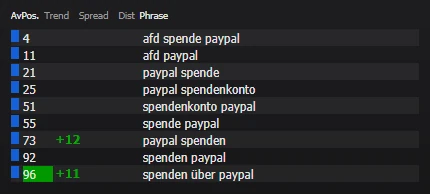
The only party that consistently ranks at the top for "spende" and "paypal" — even though other parties also accept donations via PayPal.
FDP: cannabis & subsidy
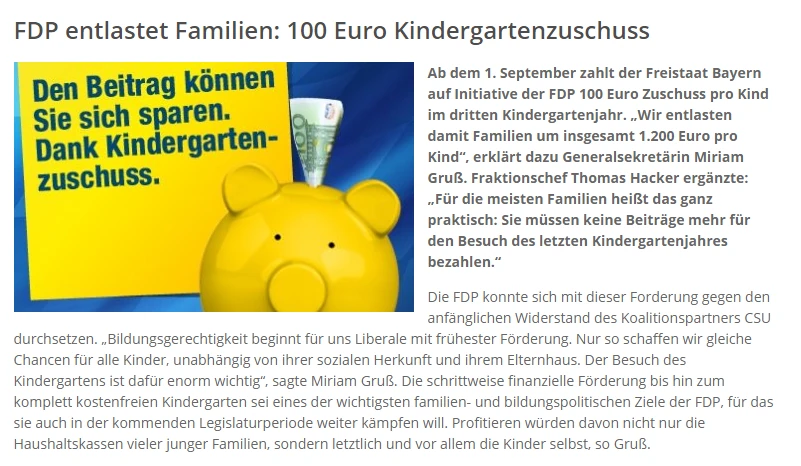
Several solid placements for "cannabis" and "rauschmittel". On the topic of childcare: "zuschuss" (FDP) is searched more often than "beitragsfrei" (SPD).
SPD: weak wording
Ranks for "spd live stream" and many off-target stream phrases. The 125-year anniversary produces placements for historical campaign posters — not relevant to the election.
CSU: 5,100 PDFs
Achieves a great many placements through PDF documents. On the first search results page, HTML documents will perform better than PDFs.
Grüne: Excel files
Even Excel files (a travel-expense form) achieve good placements — but they are irrelevant to the election.
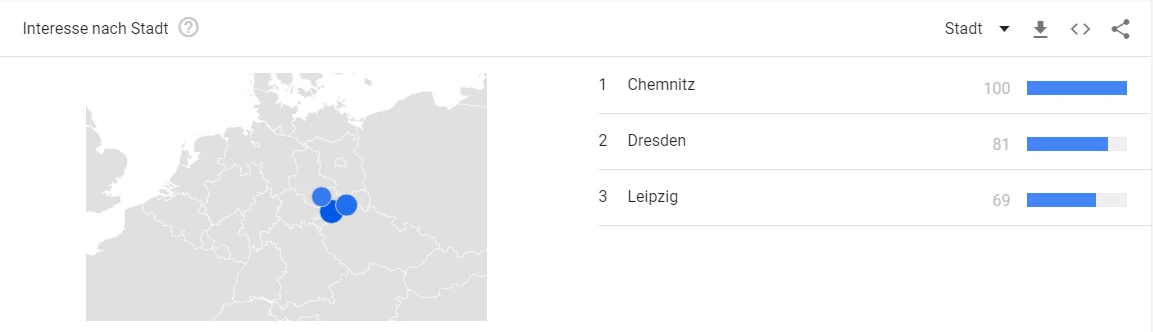
Anyone with regional roots has to be regionally visible. The federal AfD dominates in Dresden — the Bavarian parties show no comparable regional profile.
When structure prevents visibility.
Structural decisions taken without awareness of their consequences.
Die Linke
During the observation period, die-linke-bayern.de redirected to bonuama.hol.es and bonuama.de — duplicate content with a questionable trust signal. The home page is actively excluded from indexing.
Grüne
Redirecting from gruene-bayern.de to ichwill.gruene-bayern.de jeopardizes the good placements of the old home page.
FDP
Redirecting fdp-bayern.de to fdp-frisches.bayern — understandable from a marketing perspective, problematic for visibility.
What the analysis shows.
No party achieves optimal target-audience engagement. The findings at a glance.
AfD
Stands out via overly one-sided and aggressively framed content — but answers the basic questions that others ignore.
CSU
A long history and government record are traceable. Engages with refugee policy, a topic other parties avoid. No discernible "shift to the right".
SPD
Too often fails to find the right wording in a suitable technical setting. Anniversary content does not contribute to focused presence.
FDP
Stands out in places from the uniformity of the parties with the right vocabulary and provocative topics.
Grüne
Streamline their messages, emphasize personal closeness — easy to consume, but at the expense of topic diversity and visibility.
Bayern is watching critically
Within the Free State, attitudes toward the AfD are predominantly critical.